Liberal understandings of democracy in decline? Insights from European party systems
Liberal understandings of democracy in decline? Insights from European party systems
| Date: | 11/24/2026, 4:00 PM - 6:00 PM |
| Category: | talk |
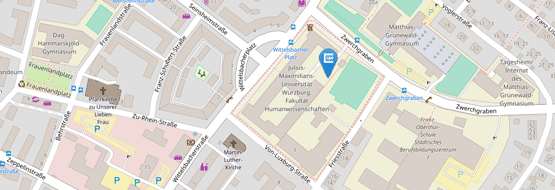
| Location: | Wittelsbacherplatz 1, 00.103 |
| Speaker: | Prof. Dr. Bein (University of Regensburg) and Dr. Mohamad-Klotzbach(University of Würzburg) |
On Tuesday, November 24, 2026, Prof. Dr. Bein (University of Regensburg) and Dr. Mohamad-Klotzbach(University of Würzburg) will speak on the topic “Liberal understandings of democracy in decline? Insights from European party systems”.

Abstract:
In Western liberal democracies, political parties are of key significance. In accordance with the principles of liberal democracy, the concept of party competition is predicated upon a core of modest parties that are characterised by a pluralist ideology, a pronounced commitment to norms of procedural decision-making, and a strict adherence to the rule of law. In light of the increasing fragmentation and polarisation, established parties of the so-called 'core' are undergoing a period of decline, whilst those representing alternative conceptions of democracy are demonstrating an increase in popularity. However, it is important to consider whether there has been a general decline in the understanding of democracy among European political parties. This would not inherently compromise the integrity of democracy; rather, it would jeopardise the stability of liberal democracy. The paper's contribution to the broader discourse on potential threats to democracy and the resilience of political parties in the face of these challenges is highlighted by its examination of shifts in the conceptualisation of democracy within European party systems. The present study examines the general strength of liberal understandings of democracy at the party system level and at the level of individual parties over time. Data on European political parties' understandings of democracy is therefore utilised, with particular reference to manifestos and expert surveys such as V-Party, in order to ascertain empirical evidence concerning these assumptions. This enables us to underscore the interconnections between the dissolution of existing parties, the emergence of new parties, and the prevailing strength of liberal conceptions of democracy as an integral facet of a party system.