
MARKOPOLO

This research project explores how scientific research on environmental health exposure informs pollution policy. To identify gaps in the information used for decision-making, experts will be interviewed, pollution policy documents analyzed, and transdisciplinary meetings observed. The study will also examine how actors in different countries bridge the gap between science and policy, highlighting boundary spanners who facilitate knowledge sharing among researchers, policymakers, and practitioners. Finally, a model will be developed to illustrate how science, policy, and practice can work together more effectively to enhance knowledge integration in environmental health risk management.
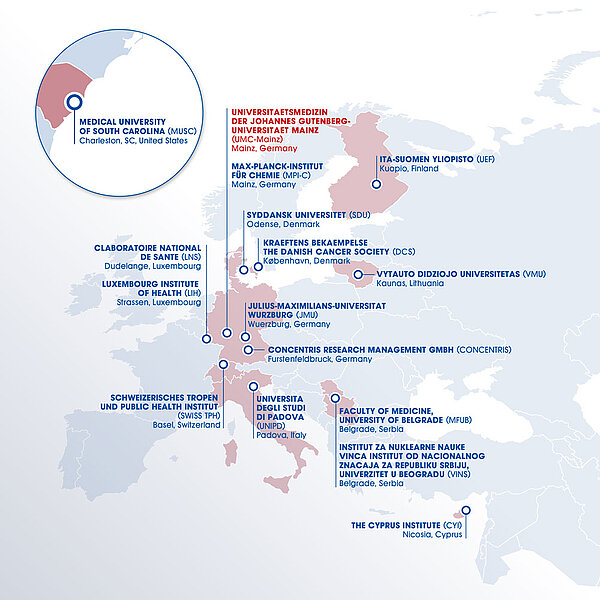
This research is embedded in the project “MARKOPOLO - Noise and/or ultrafine particulate matter induced cerebral and cardiovascular damage: novel insights from experimental and epidemiological brain-heart axis biomarkers and computational models”. MARKOPOLO aims to investigate the impact of traffic noise and air pollution, especially fine and ultrafine particulate matter, on human health through an innovative translational approach. Experimental and computational models are used in clinical, interventional and epidemiological studies. One of the main objectives is to identify disease-relevant biomarkers and to understand the molecular mechanisms involved in diseases of the brain, lung and cardiovascular system. The “from-bench-to-bedside” approach uses extensive knowledge of the brain-heart connection and applies modern methods to better understand the causes of disease.
For more information, see project homepage: https://markersofpollution-markopolo.eu/home/index.html
Funded by the European Union and the Swiss State Secretariat for Education, Research and Innovation (SERI). Views and opinions expressed are however those of the author(s) only and do not necessarily reflect those of the European Union, or the European Health and Digital Executive Agency (HaDEA) or the SERI. Neither the European Union nor the granting authorities can be held responsible for them.