Research Seminar of the Chair of Comparative Politics and German Government
10/08/2026The Chair of Comparative Politics and German Government is pleased to present its research seminar for the winter term 2026/2027.
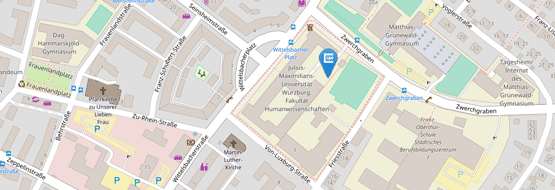
- Oct 27, 2026: 00.103 (Wittelsbacherplatz), 16:00 - 18:00 Uhr.
Ka Chun (Ray) Yung (Max Planck Institute for the Study of Societies and University of Cologne) present:
Greening the Asian Financial Center? Construction and Contestation of Green Finance in Hong Kong
Abstract: Amid escalating climate and ecological crises, states and firms face mounting institutional and societal pressures to decarbonize. Since the 2015 Paris Agreement, green finance has emerged as a key mechanism for mobilizing and redirecting capital toward low-carbon and sustainable transformation. Existing research has focused primarily on major nation states and transnational institutions, theorizing green finance in terms of macrofinancial regimes and growth models. The role of financial centers, alongside their market infrastructures and technologies, remains underexamined. As crucial nodes facilitating capital flows and linking regional actors to global markets, financial centers actively shape the development of various green financial markets. Tracing the world’s first tokenization of green bonds co-developed by the Bank for International Settlements (BIS) Innovation Hub and the Hong Kong Monetary Authority (HKMA), this dissertation chapter/paper examines a state-/bureaucracy-led mode of market-making that has forged a finance-technology nexus. It asks how financial centers participate in the construction of new green financial markets and how such markets are enabled by, and in turn reshape, complementary infrastructures and technologies. Together with the dissertation’s other case studies, it makes two major contributions. First, drawing on financial history, comparative political economy, and science and technology studies, it reconceptualizes financial centers as configurations of complementary infrastructures and technologies, making visible the often taken-for-granted sociotechnical systems through which financial centers operate and reproduce themselves. Second, by situating green finance and its associated fintech within broader geoeconomic dynamics, it foregrounds the political and conflictual character of these infrastructures and technologies.
More information
- Nov 10, 2026: Domerschulstraße 16 (Alte Universität), HS III, 18:00 - 20:00 Uhr.
Prof. Elena Semenova (University of Würzburg) presents:
Technokratie: Angebot und Nachfrage in entwickelten Demokratien seit 1945
More information
- Nov 24, 2026: 00.103 (Wittelsbacherplatz), 16:00 - 18:00 Uhr.
Prof. Dr. Bein (University of Regensburg) and Dr. Mohamad-Klotzbach(University of Würzburg) presents:
Liberal understandings of democracy in decline? Insights from European party systems
Abstract: In Western liberal democracies, political parties are of key significance. In accordance with the principles of liberal democracy, the concept of party competition is predicated upon a core of modest parties that are characterised by a pluralist ideology, a pronounced commitment to norms of procedural decision-making, and a strict adherence to the rule of law. In light of the increasing fragmentation and polarisation, established parties of the so-called 'core' are undergoing a period of decline, whilst those representing alternative conceptions of democracy are demonstrating an increase in popularity. However, it is important to consider whether there has been a general decline in the understanding of democracy among European political parties. This would not inherently compromise the integrity of democracy; rather, it would jeopardise the stability of liberal democracy. The paper's contribution to the broader discourse on potential threats to democracy and the resilience of political parties in the face of these challenges is highlighted by its examination of shifts in the conceptualisation of democracy within European party systems. The present study examines the general strength of liberal understandings of democracy at the party system level and at the level of individual parties over time. Data on European political parties' understandings of democracy is therefore utilised, with particular reference to manifestos and expert surveys such as V-Party, in order to ascertain empirical evidence concerning these assumptions. This enables us to underscore the interconnections between the dissolution of existing parties, the emergence of new parties, and the prevailing strength of liberal conceptions of democracy as an integral facet of a party system.
More information
- Jan 26, 2027: 00.103 (Wittelsbacherplatz), 16:00 - 18:00 Uhr.
Dr. Anna K. Schwickerath (University of Cologne) presents:
Entrusted power in polarized societies
Abstract: Although this field of research is far from having a universally accepted definition, most corruption researchers use a definition according to which corruption is the abuse of entrusted power for private or partisan gain. While the concept of abuse is a particularly debated topic in this field, we also consider the concept of entrusted power to be controversial. This is particularly the case in societies fragmented by violent conflicts or ethnic tensions. However, it can also occur in increasingly polarised societies with pronounced social divisions. One of the key questions here is how a lack of trust in political opponents and office holders impacts the perception of their legitimacy and accountability. We therefore intend to examine the extent to which the perception of corruption is explained by situations involving high levels of polarisation, and how this interacts with trust in political office holders and institutions at a micro level.
More information