Erasmus+ Staff Mobility: Tabea Yilu and Nea Solander visit Ilia State University in Tbilisi, Georgia
06/18/2026As part of the Erasmus+ programme, Tabea Yilu and Nea Solander from the Chair of International Relations and European Studies visited Ilia State University in Tbilisi, Georgia.
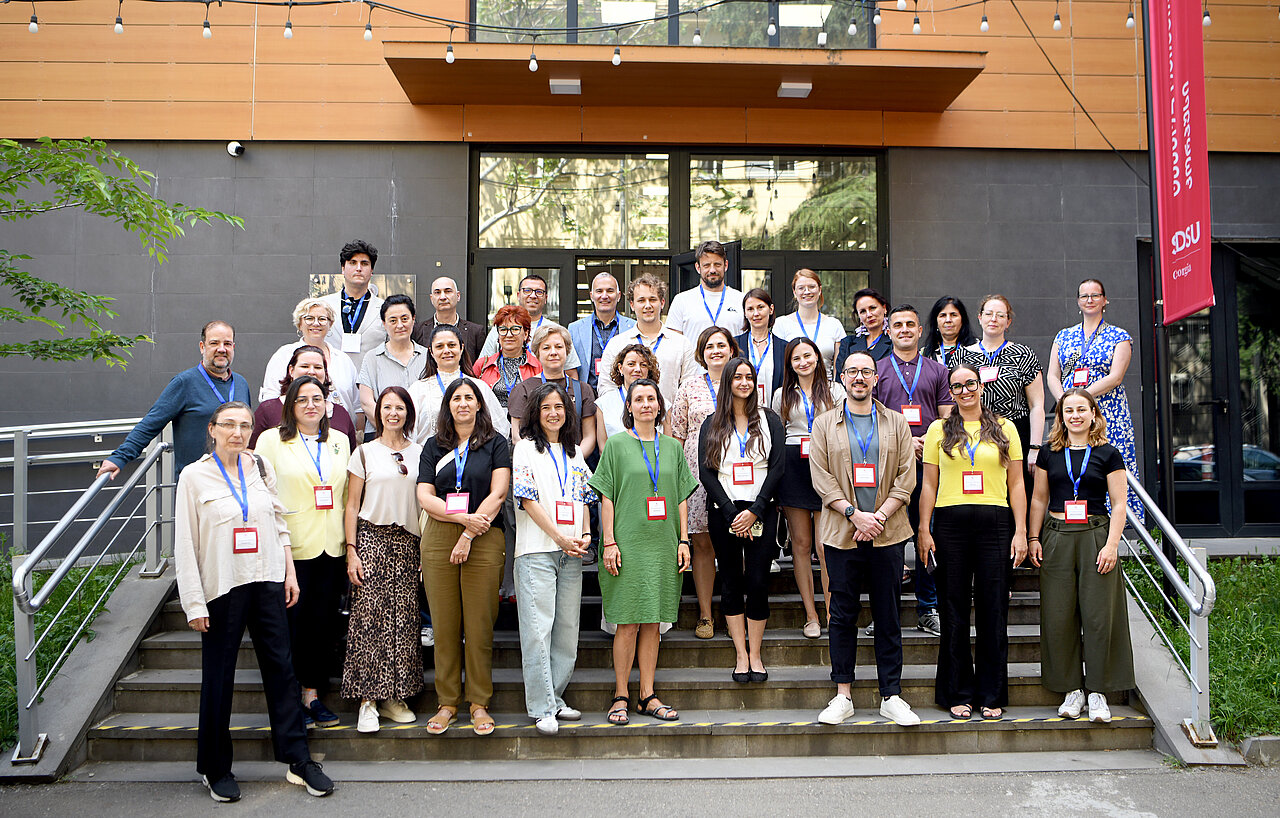
Tabea Yilu, Team Assistant at the Chair of International Relations and European Studies, participated in an International Staff Week at Ilia State University in Tbilisi, Georgia, in June 2026 as part of the Erasmus+ programme. The five-day training programme focused on "Intercultural Competence and Effective Communication" and was specifically designed for university staff from different countries.
Her participation was based on a recommendation and on existing contacts between the two institutions. During her stay, she had the opportunity to engage extensively with international colleagues and gain insights into different higher education systems and working practices. Particular emphasis was placed on the role of intercultural communication in the day-to-day activities of higher education institutions.
The programme provided valuable inspiration and new perspectives for her work at the institute. Participation in the Staff Week therefore not only contributed to her professional development but also strengthened the international network of the Chair and generated valuable ideas for the future development of internal processes within the institute.
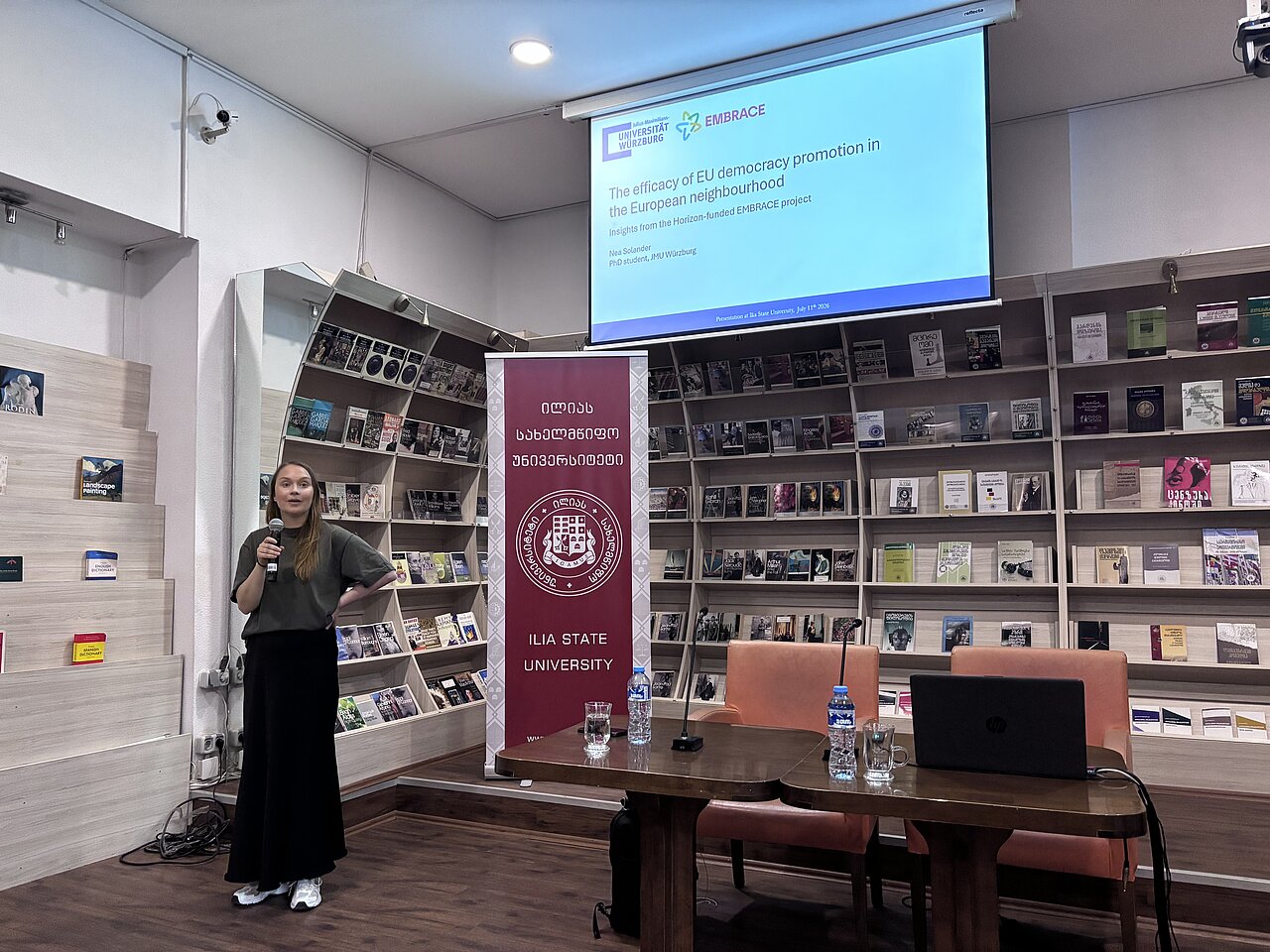
Nea Solander, Member of Faculty and Researcher at the Chair of International Relations and European Studies, visited Ilia State University in Tbilisi as part of the Erasmus+ Staff Mobility for Teaching programme. During her stay, she contributed to the course "EU as a Regional Actor". As part of the visit, she engaged with students through guest lectures and discussions focused on the role of the European Union as a regional actor.
In addition to teaching activities, Nea delivered a public lecture presenting the main findings from Work Package 3 of the EMBRACE project, including findings from her thesis. The lecture highlighted key analytical results and emerging conclusions on the efficacy of EU democracy promotion. The event also provided an opportunity for academic exchange with faculty members, students, and the public, fostering dialogue on EU democracy promotion.
Additional images