International Relations Beyond Binary Thinking – Guest Lecture by Professor Deepshikha Shahi
07/15/2026How can international relations be explained without reducing them to rigid binaries such as friendship and enmity or cooperation and competition? Indian political scientist Professor Deepshikha Shahi addressed this question in a public guest lecture at the University of Würzburg.
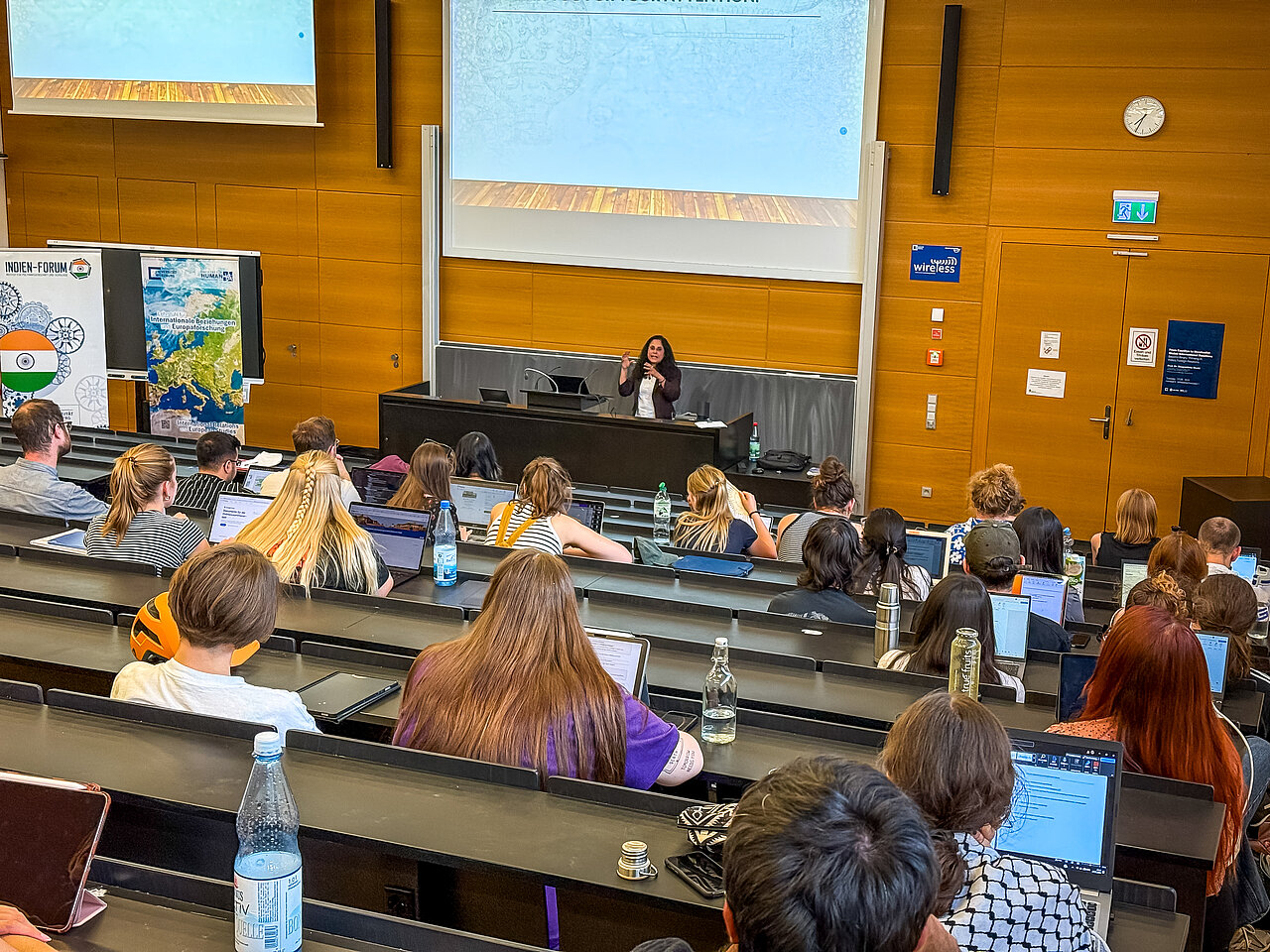
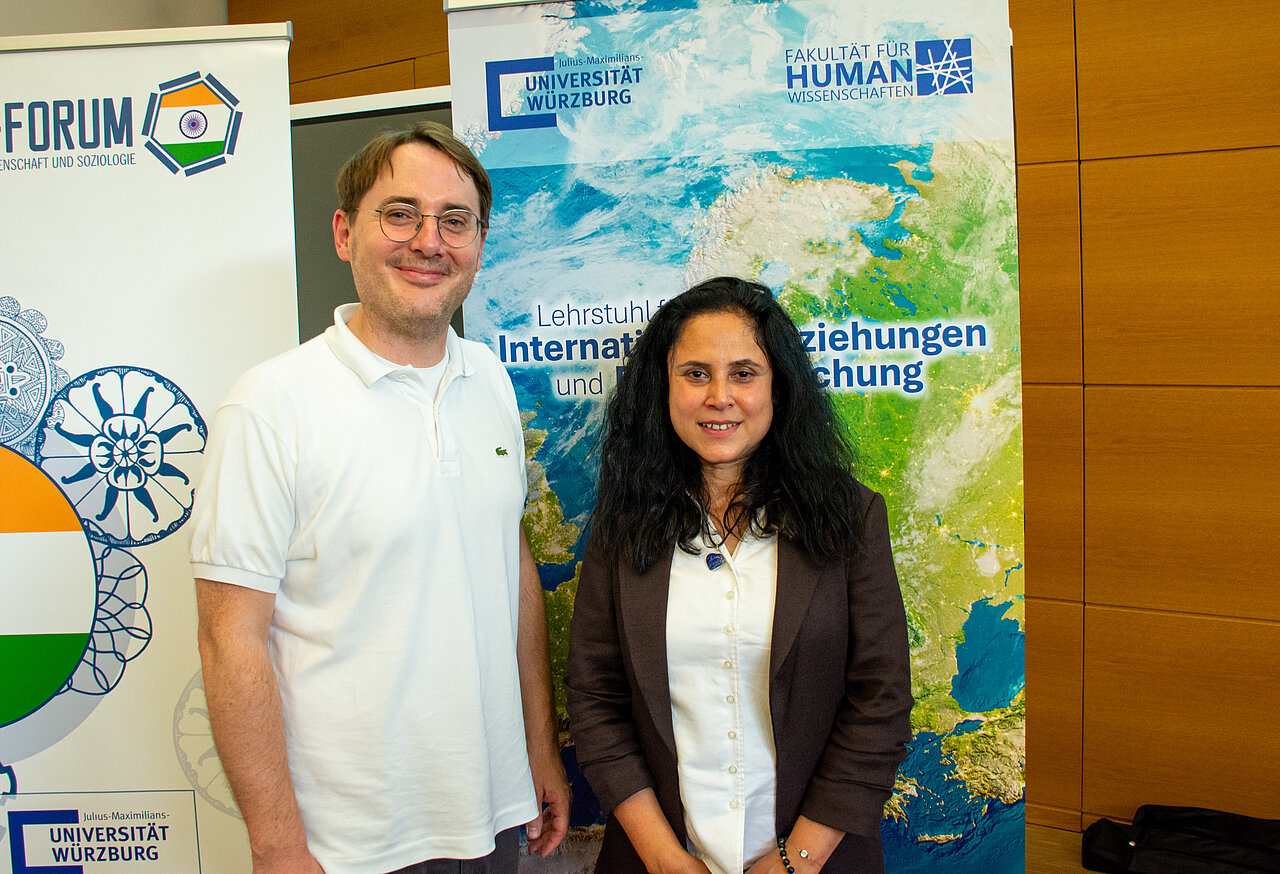
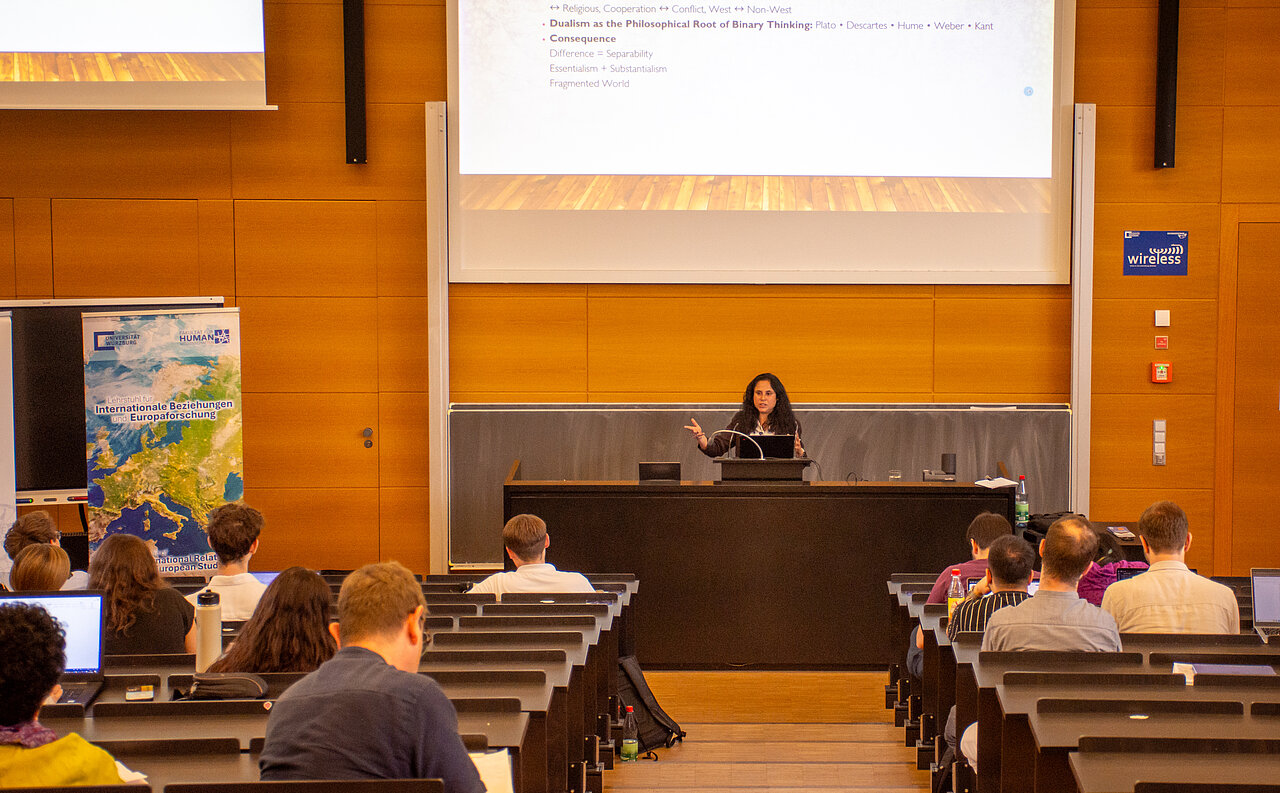
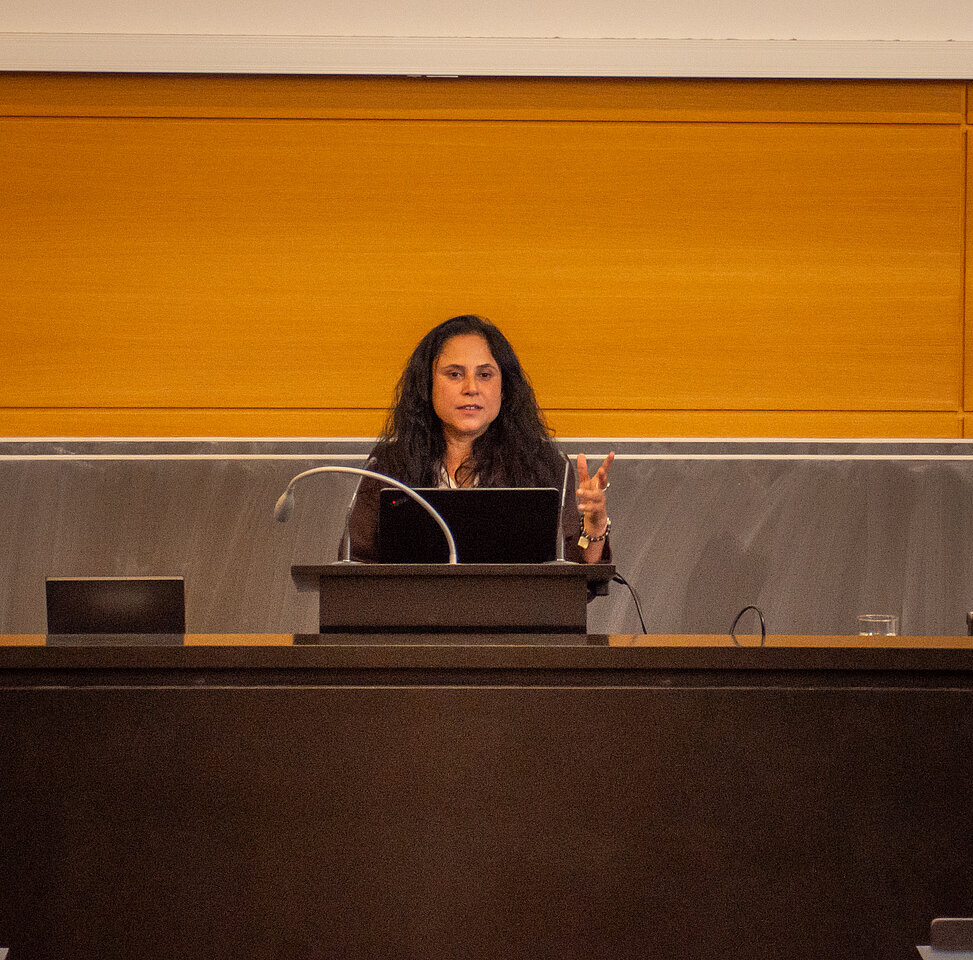
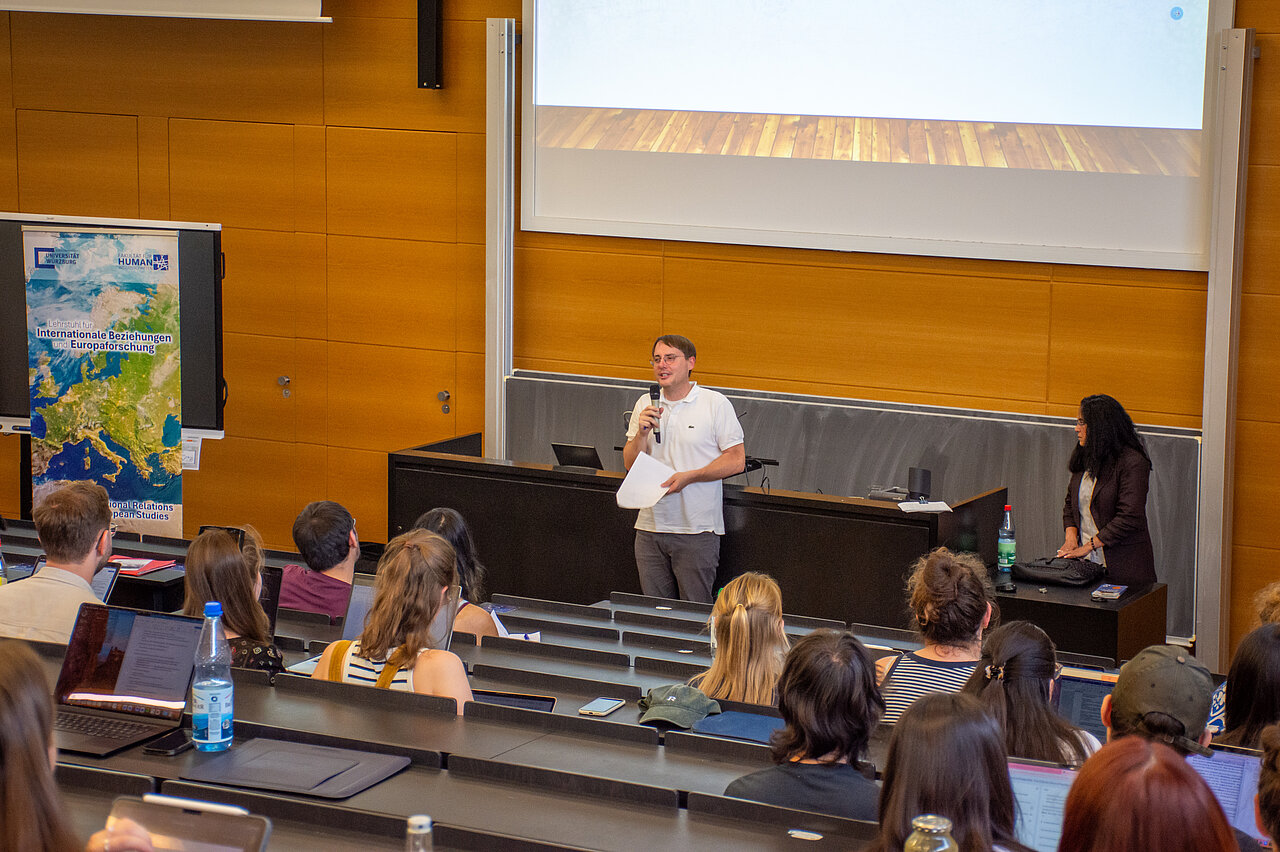
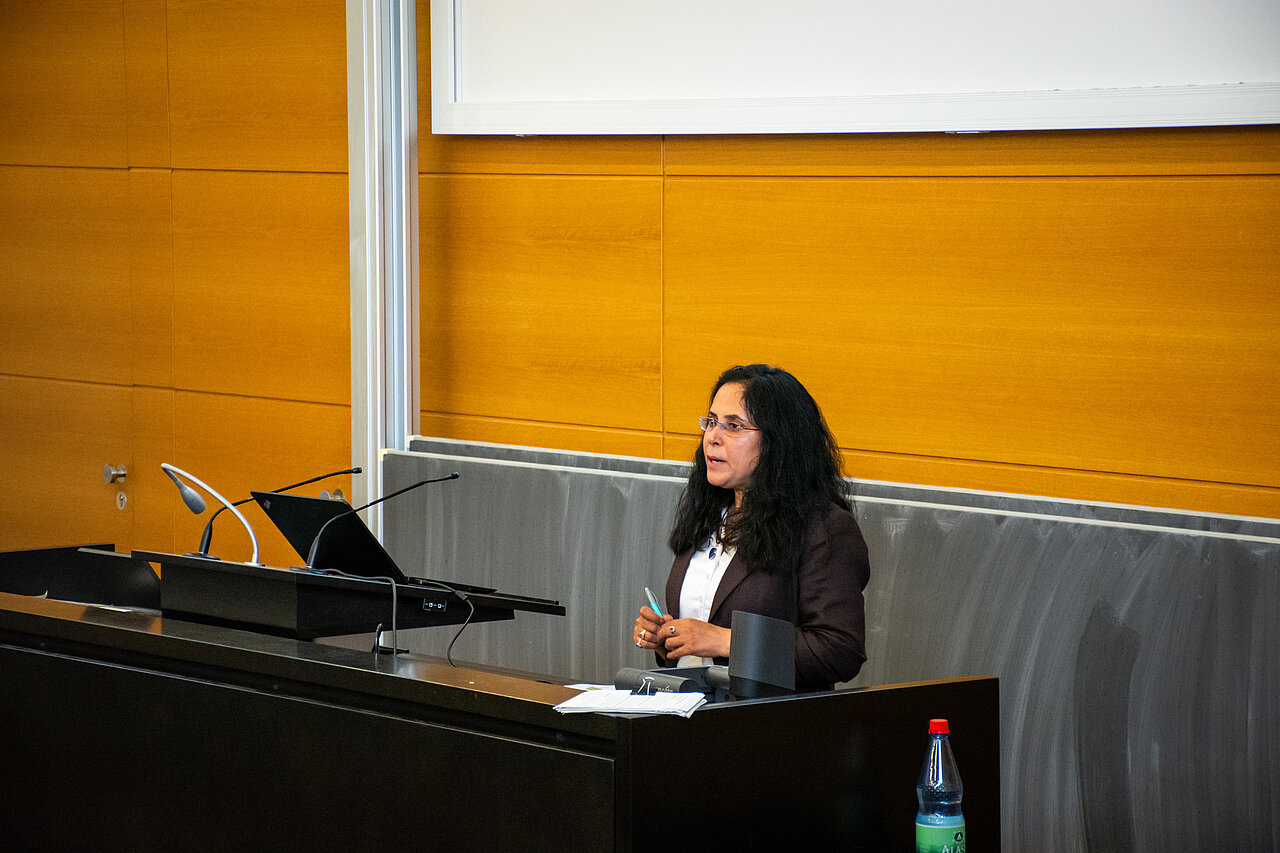
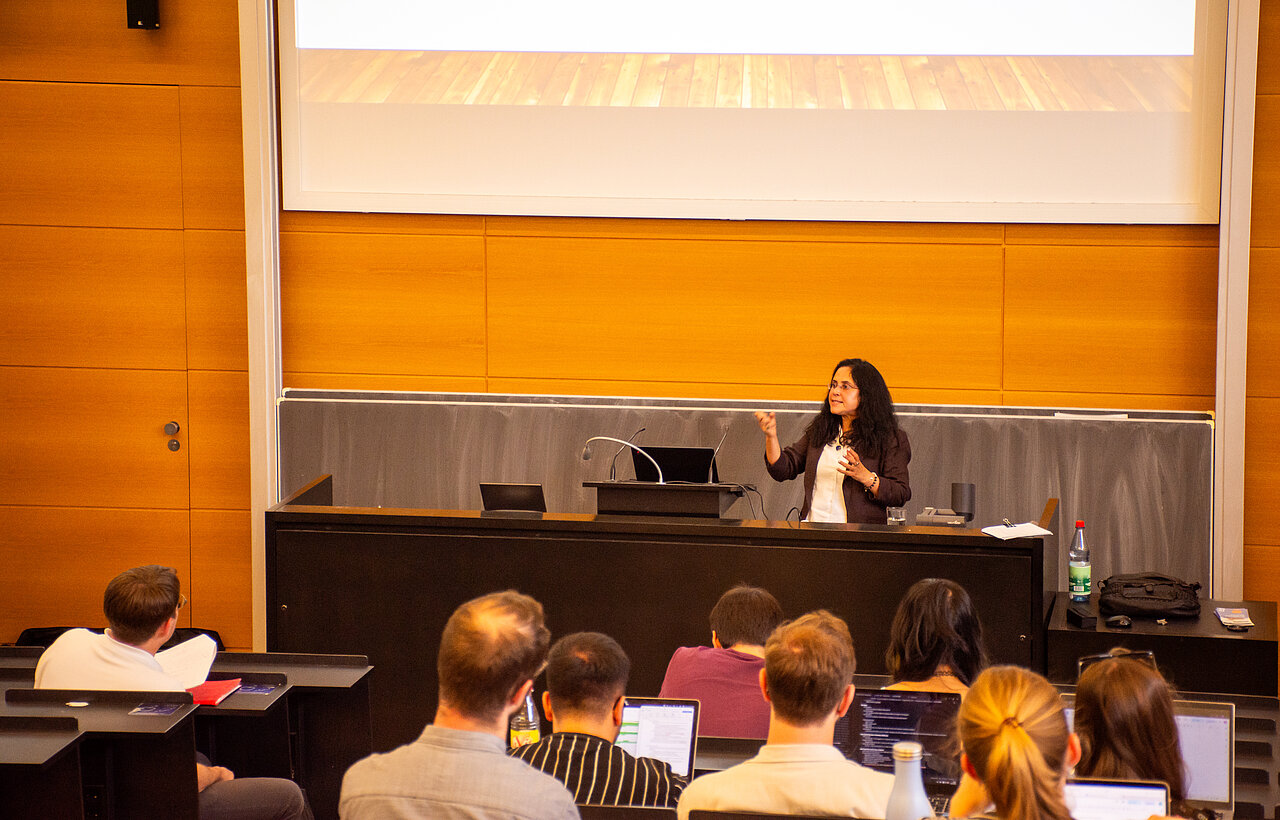
On 7 July 2026, Professor Shahi spoke as part of Dr. Philipp Gieg’s seminar “India in International Relations” at the University of Würzburg’s Chair of International Relations and European Studies. In her public lecture, entitled “From Kautilya to Nondualist Global IR: Beyond Binary Thinking in India’s Foreign Relations”, she presented a theoretical approach that moves beyond the established binary categories of International Relations.
Shahi is a Humboldt Fellow at the University of Rostock and a professor at the Jindal School of International Affairs in India. In her lecture, she traced the development of what is known as Global International Relations (Global IR) through three generations.
The first generation, often referred to as "Non-Western IR", expanded the discipline by incorporating non-Western ideas and thinkers such as the ancient Indian political thinker Kautilya. However, these were often still interpreted within established theoretical approaches such as Realism. The postcolonial and decolonial approaches of the second generation placed Western and non-Western knowledge traditions alongside one another while retaining their analytical separation.
The lecture focused on the third generation advocated by Shahi: "nondualist Global IR". This approach understands global politics as a field in which difference and mutual interconnectedness coexist. From this perspective, relations between states should no longer be understood exclusively through fixed categories such as alliance or rivalry, friendship or enmity.
Using relations among India, China and the United States as an example, Shahi demonstrated that cooperation and competition need not be mutually exclusive. Instead, India’s relations with other major powers can be understood as dynamic and interconnected processes. Such a post-binary perspective can help capture the complexity of contemporary global politics more accurately.
The public lecture was jointly organised by the India Forum at the Institute of Political Science and Sociology and the University of Würzburg’s India Competence Centre (ICCUW).
Additional images