Call for Papers: The Development–Security Nexus in Flux
17.11.2026How are recent shifts in global development governance changing the way providers of development cooperation and partner countries understand and act on the relationship between development and security? An international workshop at IPS on 24–25 June 2027 will examine the role of emerging powers, aid cuts and partner-country agency in these changes. Abstracts are welcome until 16 December 2026.

Dr. Philipp Gieg (University of Würzburg) and Dr. Anja Menzel (University of Bamberg) are organising the international workshop "The Development–Security Nexus in Flux: How Emerging Powers, Aid Cuts and Partner-Country Agency Reshape Development Cooperation", with support from the Bavarian Research Alliance for Peace, Conflict and Security Studies (FoKS).
The Development–Security Nexus in Flux
How Emerging Powers, Aid Cuts and Partner-Country Agency Reshape Development Cooperation
International Workshop · University of Würzburg · 24–25 June 2027
Call for Papers
How are recent shifts in global development governance changing the way providers of development cooperation and partner countries understand and act on the relationship between development and security? We invite paper proposals for the international author workshop “The Development–Security Nexus in Flux: How Emerging Powers, Aid Cuts and Partner-Country Agency Reshape Development Cooperation”.
The growing influence of emerging powers as providers of development cooperation raises the question of where their approaches, rooted in longstanding traditions of South-South cooperation, converge with or diverge from those of established donors. At the same time, several OECD-DAC donors have sharply reduced their development budgets. US official development assistance alone fell by more than half between 2024 and 2025.
The workshop examines how these shifts affect the ways in which governments, development agencies and other actors understand the development–security nexus and put it into practice. We understand security broadly, encompassing the defence of states against military threats, the economic security of states and societies, and the protection of people’s lives and livelihoods from violence, economic disruption and environmental risks, including the gendered dimensions of these risks. The relationship between development and security can run in either direction: Security can be a precondition for development, while development cooperation may be pursued as a means of advancing security, whether by supporting regional stability, strengthening state institutions or reducing vulnerability to food and health crises. We are interested in how these understandings vary across actors and contexts, and how they change as development partnerships and funding priorities shift.
We welcome contributions from researchers at all career stages working in political science, International Relations, development studies, security studies, peace and conflict research and related areas. We envisage developing a proposal for a special issue of an international academic journal drawing on selected workshop papers. Papers might address questions such as:
- Emerging powers and South–South cooperation: How do providers such as China, India, Brazil, South Africa or Turkey conceptualize the relationship between development and security? How do principles such as sovereignty, non-interference and mutual benefit inform the design and implementation of projects with security implications?
- Responses by established donors: How, if at all, have established donors changed the way they link development and security in their strategies, funding priorities or partnerships in recent years? To what extent have these changes been driven by the growing influence of emerging powers, by domestic political or budgetary pressures, or by a combination of these factors?
- Securitisation: Under what conditions do political actors frame a development issue as a security threat? To what extent does that framing influence where resources go, what instruments are considered or which institutions take the lead?
- Aid cuts and retrenchment: When donors cut aid budgets, what role do security considerations play in deciding which programmes to protect, redesign or discontinue? How do partner governments and communities respond to the loss of funding, particularly following US aid cuts? And what are the consequences for conflict prevention, regional stability, economic security or human security?
- Perspectives from partner countries: How do governments, civil society organisations and affected communities in countries receiving development finance interpret and shape the relationship between development and security? How have new partnerships or the loss of funding affected these actors’ ability to pursue their own development and security priorities?
Please send an abstract of no more than 350 words to philipp.gieg@uni-wuerzburg.de and anja.menzel@uni-bamberg.de by 16 December 2026, including your institutional affiliation and email address. We will send acceptance notifications by 22 December 2026.
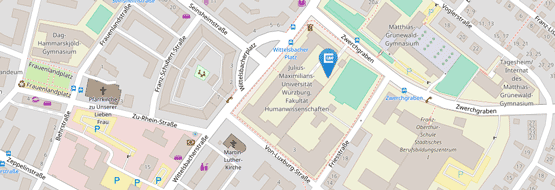
The workshop will take place at the University of Würzburg, Germany, on 24–25 June 2027. For presenters of accepted papers, funding is available to cover train travel to Würzburg from within Germany or from a neighbouring country, as well as one night’s accommodation.
The workshop is organised by Dr. Philipp Gieg (University of Würzburg) and Dr. Anja Menzel (University of Bamberg), with support from the Bavarian Research Alliance for Peace, Conflict and Security Studies (FoKS).