Greening the Asian Financial Center? Construction and Contestation of Green Finance in Hong Kong
Greening the Asian Financial Center? Construction and Contestation of Green Finance in Hong Kong
| Datum: | 27.10.2026, 16:00 - 18:00 Uhr |
| Kategorie: | Vortrag |
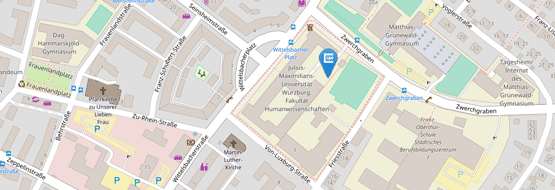
| Ort: | Wittelsbacherplatz 1, 00.103 |
| Vortragende: | Ka Chun (Ray) Yung (Max Planck Institute for the Study of Societies and University of Cologne) |
Am Dienstag, den 27. Oktober 2026, spricht Ka Chun (Ray) Yung (Max Planck Institute for the Study of Societies and University of Cologne) zum Thema „Greening the Asian Financial Center? Construction and Contestation of Green Finance in Hong Kong".
Abstract:
Amid escalating climate and ecological crises, states and firms face mounting institutional and societal pressures to decarbonize. Since the 2015 Paris Agreement, green finance has emerged as a key mechanism for mobilizing and redirecting capital toward low-carbon and sustainable transformation. Existing research has focused primarily on major nation states and transnational institutions, theorizing green finance in terms of macrofinancial regimes and growth models. The role of financial centers, alongside their market infrastructures and technologies, remains underexamined. As crucial nodes facilitating capital flows and linking regional actors to global markets, financial centers actively shape the development of various green financial markets. Tracing the world’s first tokenization of green bonds co-developed by the Bank for International Settlements (BIS) Innovation Hub and the Hong Kong Monetary Authority (HKMA), this dissertation chapter/paper examines a state-/bureaucracy-led mode of market-making that has forged a finance-technology nexus. It asks how financial centers participate in the construction of new green financial markets and how such markets are enabled by, and in turn reshape, complementary infrastructures and technologies. Together with the dissertation’s other case studies, it makes two major contributions. First, drawing on financial history, comparative political economy, and science and technology studies, it reconceptualizes financial centers as configurations of complementary infrastructures and technologies, making visible the often taken-for-granted sociotechnical systems through which financial centers operate and reproduce themselves. Second, by situating green finance and its associated fintech within broader geoeconomic dynamics, it foregrounds the political and conflictual character of these infrastructures and technologies.