The IPS at the ECPR General Conference 2026 in Kraków
29.10.2026This year, the ECPR General Conference took place from September 8th to 11th, 2026 in Kraków and brought together more than 2.000 political scientists from all around the world. The IPS was very engaged and contributed to several sections in different research fields of Comparative Politics, Sustainability Studies and Knowledge Research.
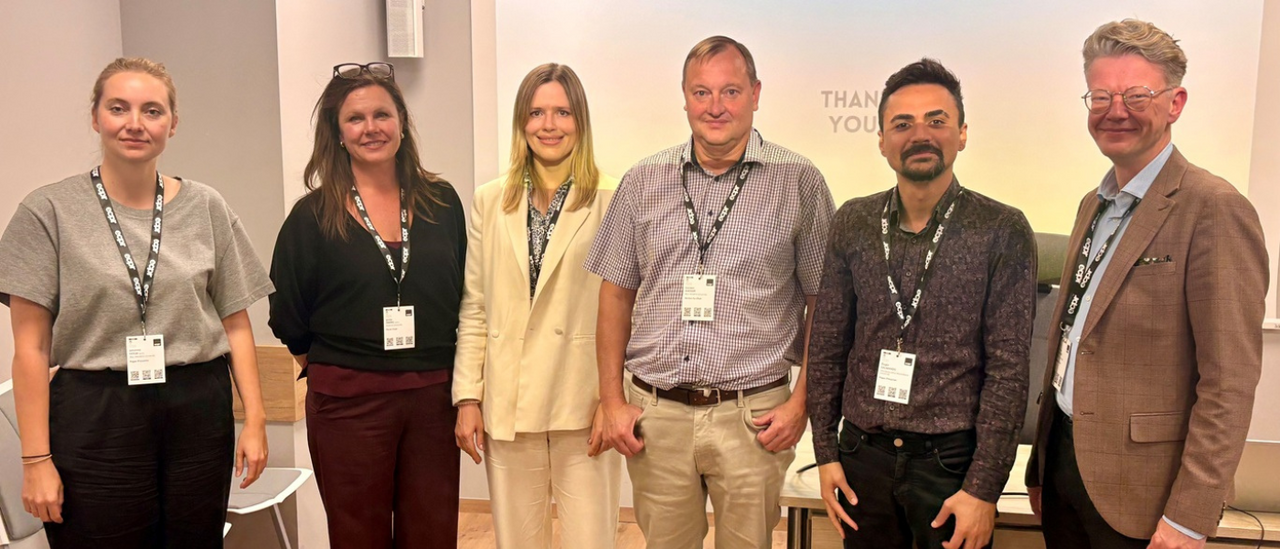
Prof. Dr. Elena Semenova (Chair of Comparative Politics) organized a section on “Elites and Political Leadership in the Digital Age: Disruption, Transformation, and Democratic Futures” together with Michelangelo Vercesi (University of Naple). The section was endorsed by the ECPR Standing Group on Elites and Political Leadership and consisted of five panels. Additionally, she was chair of the Panel “Performing “the People” Online: Platforms, Affect, and Political Meaning” and presented a paper on “The Impact of Direct Prime Minister Elections on Cabinet Stability: The Case of Israel” in the panel “Performing Power: Leadership Style, Charisma, and Authority in Personalized Politics”.
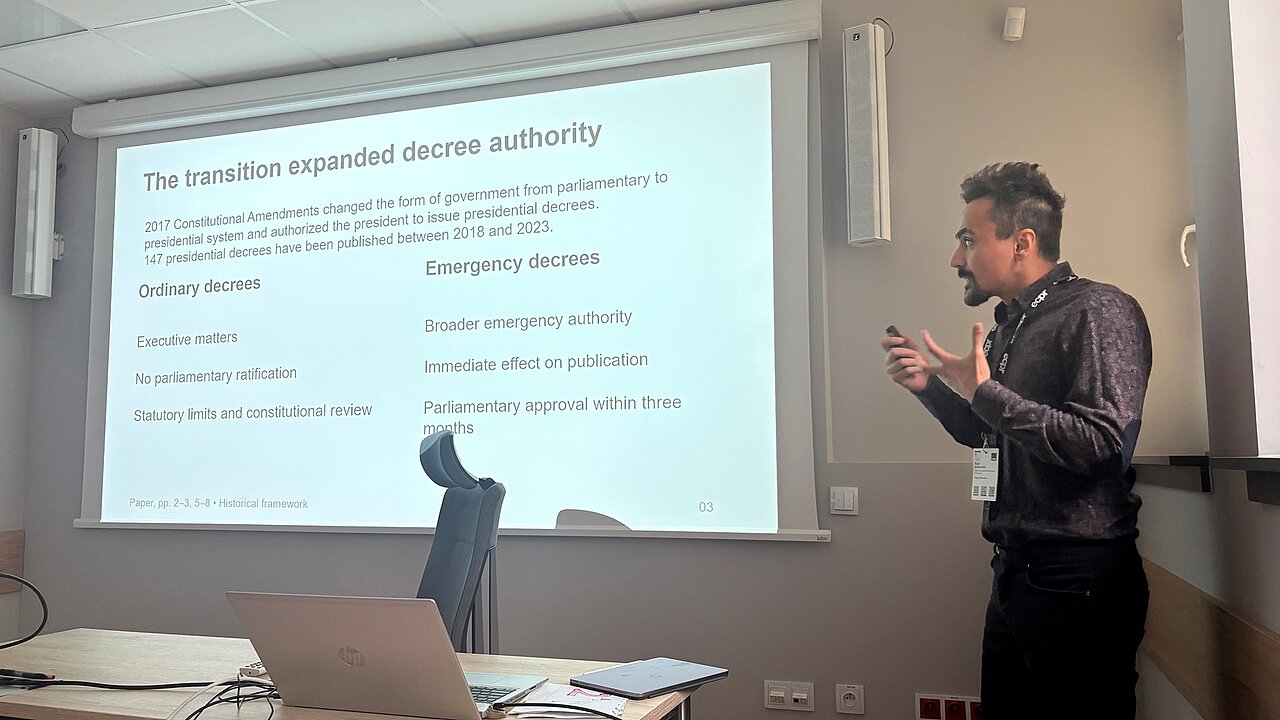
Dr. Özgür Salmanoğ (Chair of Comparative Politics) presented his paper “Presidential decrees as instruments of autocratization: the case of Turkey’s institutional transformation” in the panel “Presidents and Executive Power in Hybrid Regimes and Autocracies.” Drawing on an analysis of 147 presidential decrees issued between 2018 and 2023, his research examines how decree powers have reshaped Turkey’s state institutions and concentrated authority in the presidency. He also attended panels exploring democratic backsliding and resilience in Central and Eastern Europe, the political theory and ethics of resisting electoral autocracies, and authoritarian strategies of regime change. Further panels addressed affective polarization, democratic erosion, and party institutionalization, placing Turkey in comparative perspective. He also participated in the Southern European Politics group meeting.
PhD Candidate Alessandro Di Biagio (Chair of Comparative Politics) participated with the presentation of two research papers in two panels. First, in the panel named “Populism, Representation, and the People,” he presented a paper titled “One Radical, Not Many: Party System Institutionalization and the Type and Number of Populist Parties.” This study uses a dataset of 369 populist party observations across 25 European countries (2000–2024) to examine how party system structures shape the types and the number of populist parties in national competition. This paper is currently under review. Additionally, Alessandro presented a second paper titled “Technocracy or Not, This is the Question: Can Party System Predict the Number of Technocrats in Governments?” in the panel “Performing Power: Leadership Style, Charisma, and Authority in Personalized Politics.” The paper investigates whether structural features of party systems can predict the share of non-partisan expert appointments in 30 European countries from 2000 to 2024. This research has been published in Party Politics.
PhD Candidate Almut Mohr (Professorship of Social Science Sustainability Studies) served as chair of the panel “just transition” in the Section “Climate Governance in Turbulent Times: Ambition, Implementation and Contestation”. As part of this panel, she presented her paper on “Contested just transition in South Africa: An exploratory scope of just transition index”, which draws on qualitative research and develops an index measuring the envisioned scope of just transition across and within the environmental and labour movement in South Africa.
Together with Prof. Dr. Ulrike Zeigermann (Professorship of Social Science Sustainability Studies) Dr. Christoph Mohamad-Klotzbach (Professorship of Social Science Sustainability Studies) presented a paper on “Boundary Spanners in Environmental Health” in the panel “The Role of Experts and Expertise in Climate Transition and Environmental Governance” of the Section “Knowledge, Science and Expertise”. This research is based on data collected and analyzed in the EU-funded project MARKOPOLO. Additionally, Mohamad-Klotzbach was engaged with several roles in the Section “Threats to Democracy and What to Do About Them: A Science of the Democracies Action Guide” of the ECPR Network “The Sciences of the Democracies”. Together with Prof. Dr. Simon Bein (University of Regensburg) he presented a paper on “Liberal understandings of democracy in decline? Insights from European party systems” in the “Open panel” of the Section. He served as a chair of the panel “Constitutional Safeguards and Institutional Design”, as a co-chair of the panel “Towards New Democratic Imaginaries” and as a discussant in the panel “Democratic Innovations and Experiments”.
Information on the ECPR General Conference 2026 in Kraków can be found here.
Weitere Bilder