Program winter term 2025-26: Sustainability policy on the defensive?!

Sustainability goals are currently on the defensive. The UN’s 2024 review shows that the international community has fallen far behind in its implementation of the 2030 Agenda: only 17% of the assessable targets are still achievable by 2030, while almost half (48%) show moderate to significant deviations from the target path. According to the report, it is worrying that 18% of the goals are stagnating at 2015 levels and 17% are even declining.
Since the causes of the problems in achieving sustainability goals are less technical and economic in nature and more political and institutional, it is the task of interdisciplinary social science sustainability research to address these socio-political upheavels, classify them, and develop explanations and solutions.
The interdisciplinary series of events will address the debates under the following thematic focal points and continue them with guest speakers, researchers and students:

European sustainability policy on the defensive?
Geopolitical tensions, energy crises and the consequences of the COVID pandemic are also putting pressure on the EU to implement its sustainability goals. The Clean Industrial Deal aims to ease the burden on industry, reduce energy prices and strengthen international competitiveness. The Wuppertal Institute considers the approach to be an important signal, as it combines transformation, resilience and competitiveness. However, it remains unclear wether the necessary funding can be mobilized due to the shift of responsibility to member states. In addition, there is a strong focus on recycling and security of supply. As a result, new circular economy business models and the “Energy Efficiency First” principle are taking a back seat.
Deliberative democracy as a solution strategy:
Another focus of the event series will be to present deliberative democracy as a possible solution strategy. The number of deliberative lottery-based procedures at the international, national and especially municipal levels has steadily increased in recent years. However, little research has been done on so-called hybrid citizens’ councils, which arise from joint projects between public decision-makers, civil society and private investors. This arises the question of what conditions are necessary for such challenging formats to succeed – especially in light of growing reservations about sustainability and participation at the local level.
Sustainable education as a solution strategy:
Education for sustainable development also plays a central role in addressing the current defensive stance on sustainability goals. As public support for climate policy and social justice wanes, education is gaining importance as a long-term transformation strategy. Target 4.7 of the Sustainable Development Goals (SDGs) emphasizes that all learners should acquire skills for sustainable development by 2030. Schools and universities are not only places of knowledge transfer, but also central spaces for promoting values, attitudes and decision-making skills. Therefore, one of the topics to be discussed in this series of events is how education and education systems can contribute to promoting sustainable development while remaining resilient to political and social countercurrents.
With this series of events for the winter term 2025/26, we want to address current dynamics and examine the topic of “Sustainability policy on the defensive?!” in the context of normativity and normality.
Events in winter term 2025/26
The potential of citizens’ councils: What role can they play in our political system?
Dr. Matthias Gsänger, Philipp Kessler and Levi Rhomberg (JMU)
Tuesday · 25.11.2025 · 18:15
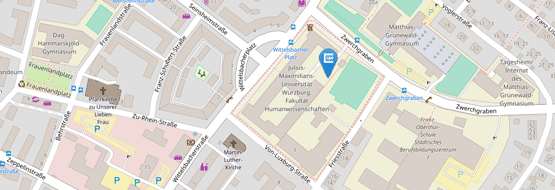
Room 03.103 · Wittelsbacherplatz 1
On 25.11.2025 at 18:00 c.t. in room 03.103 at Wittelsbacherplatz Dr. Matthias Gsänger, Philipp Kessler and Levi Rhomberg (all from JMU) will give a lecture on the topic “The potential of citizens’ councils: What role can they play in our political system?”. The Würzburg Future Council on “Fair Mobility” provides an example: How are citizens’ councils legitimized? Are the recommendations implemmented? How free from domination can discussion be? We present the project, embed it in democratic theory and compare it with international successes and failures. We also invite you to a discussion round with a focus of your choice. We look forward to your participation and a lively exchange!
More
Normativity and criticism: Political education in the context of sustainability and transformation
JProf. Dr. Steve Kenner (Pädagogische Hochschule Weingarten)
Monday · 15.12.2025 · 18:15
Room 03.105 · Wittelsbacherplatz 1
On 15.12.2025 at 18:00 c.t. in room 03.105 at Wittelsbacherplatz JProf. Dr. Steve Kenner (University of Education Weingarten) will give a lecture on the topic “Normativity and criticism: Political education in the context of sustainability and transformation”:
Education faces particular challenges in times of authorian temptations and multiple crises. Political education in particular, as a democratic educational mandate with constitutional status, is caught between normative principles and the need to enable young people to take a critical look at existing conditions. This lecture will explore the potential as well as the challenges for political education in the context of sustainability and transformation.
The Würzburg Future Council: Deliberative democracy as a solution strategy
Lecture and discussion with representatives from academia and civil society
Wednesday · 21.1.2026 · 18.30 - 20.00
Wittelsbacherplatz 1, Raum 03.103
On 21.01.2026 at 18:30 s.t. in room 03.103 at Wittelsbacherplatz Levi Rhomberg, Linda Koch (both JMU) and participants of the Würzburg Future Council will give a lecture followed by a discussion round on the topic “The Würzburg Future Council: Deliberative democracy as a solution strategy”. Participants as well as the project and research teams will provide insights into the project process and facilitate a deeper exchange on Würzburg's first citizens' council. Please feel free to drop by and contribute to the discussion! We look forward to a lively exchange!
Natural resources: On exploitation and socialization – The law as a solution strategy
+++ CANCELLED +++
The events will be organized in interdisciplinary cooperation with the Chair of Social Science Sustainability Research, the Department of Political Theory, the Chair of International Relations and European Studies, the Chair of Public Law and International Economic Law and the WueLAB. In terms of content, the events follow on from the debates from the summer term 2023 on “Transformative Sustainability Knowledge”, the winter term 2023/24 on „Sustainability as a challenge for deliberative democracy” and the summer term 2025 on „Negotiation, mediation, and legalization of global sustainability goals“.